


Innovations in PVC Foam Technology for Sustainable Construction
time:
2025-06-27 17:53
source:


The construction industry is increasingly adopting PVC foam as a lightweight, durable, and eco-friendly alternative to traditional materials. One of its most significant innovations lies in its closed-cell structure, which enhances thermal insulation and moisture resistance. Unlike open-cell foams, closed-cell PVC foam traps air within its microscopic cells, reducing heat transfer and preventing water absorption. This property makes it ideal for roof insulation and wall panels, where energy efficiency is critical.
Recent studies highlight that 2.2mm-thick PVC foam exhibits a thermal conductivity of 0.06 kcal/m·h·℃, six times lower than traditional cement tiles. This performance is attributed to its high-density foam core, which is engineered through precise control of the foaming process. Manufacturers adjust parameters like temperature gradients, foaming agent concentration (typically 2–6%), and extruder screw compression ratios to optimize cell size and distribution. For instance, a 2025 study modeled the stiffness of closed-cell PVC foam using fibrous composite theory, demonstrating its anisotropic mechanical behavior—stiffer in the rise direction than in planar directions. This ensures structural integrity in load-bearing applications.
Another key advantage is fire resistance. PVC foam complies with national fire safety standards, achieving a difficult-to-ignite (B1) rating due to its inherent chlorine content and additive formulations. Tests show that under low-temperature (-5℃) drop-weight impacts, PVC foam panels remain intact after 10 consecutive strikes, outperforming wooden alternatives. Its longevity—lasting 50+ years in harsh climates—further reduces lifecycle costs.
Applications extend beyond insulation. In furniture manufacturing, PVC foam serves as a lightweight, moisture-resistant core for cabinetry and office partitions. Its wood-like machinability allows for easy sawing, drilling, and nailing, eliminating the need for adhesives.
As sustainability becomes a priority, PVC foam’s recyclability and low VOC emissions align with RoHS and REACH standards. Innovations in bio-based additives and reduced production waste are poised to further enhance its environmental footprint.
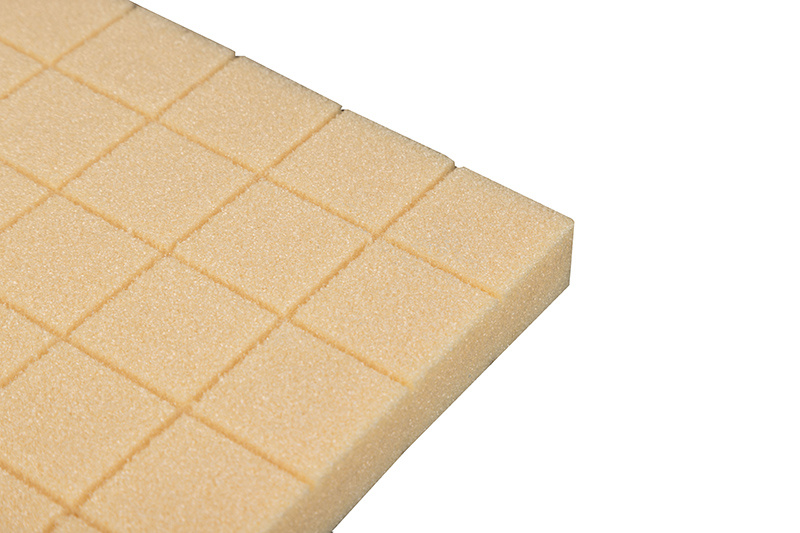
PVC foam,closed-cell structure,thermal insulation,fire resistance
Latest News