


The Core of Lightweight Strength: Using PMI Foam in Composite Sandwich Panels
time:
2025-05-06 18:07
source:


In the world of advanced materials, achieving high strength and stiffness while minimizing weight is the ultimate goal. Composite sandwich panels represent a leading solution for this challenge. These structures consist of two thin, strong face sheets (often made from materials like carbon fiber or fiberglass) separated by a lightweight core material. This configuration provides exceptional structural efficiency, similar to an I-beam, where the face sheets carry the bending stresses and the core resists shear forces and prevents the skins from buckling. Among the various core materials available, PMI foam (Polymethacrylimide foam) stands out as a premier choice for demanding, high-performance applications.
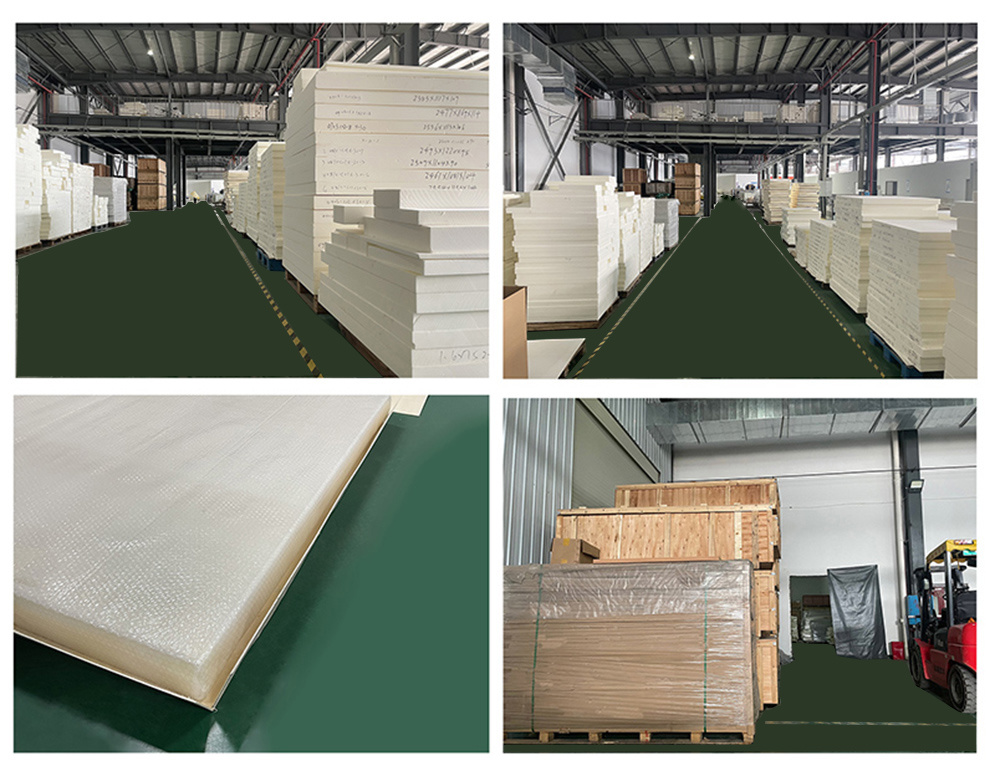
Why PMI Foam as Your Composite Core?
Choosing the right core material is critical to a sandwich panel's performance. While honeycomb, balsa, and other foams are used, PMI foam offers a unique combination of properties that make it particularly advantageous:
- Exceptional Strength and Stiffness Relative to Weight: PMI foam boasts an outstanding strength-to-weight ratio. Its rigid, closed-cell structure effectively supports the face sheets, enabling the entire panel to withstand significant loads and resist deformation without adding substantial mass.
- High Temperature Resistance: Unlike many other foam cores, PMI foam can withstand the elevated temperatures often required for curing high-performance composite resins, especially in processes like autoclave curing. This thermal stability ensures the core maintains its integrity during manufacturing.
- Excellent Shear Strength: The core is responsible for transferring shear loads between the face sheets. PMI foam provides robust shear strength, crucial for maintaining the structural integrity of the sandwich panel under various stress conditions.
- Uniform Properties: PMI foam has consistent mechanical properties throughout the block, ensuring predictable and reliable performance in the final composite structure.
- Closed-Cell Structure: The closed-cell nature of PMI foam prevents moisture ingress, which is vital for durability and preventing degradation, especially in marine or outdoor applications. It also provides some level of thermal and acoustic insulation.
- Fine Cell Structure & Machinability: PMI foam has a very fine cell structure that allows for precise CNC machining. This enables the creation of complex, detailed core geometries necessary for intricate composite designs, tapers, and integrated features.
- Excellent Bondability: PMI foam cores bond exceptionally well with various composite resins and adhesives, ensuring a strong and reliable interface between the core and the face sheets.
Manufacturing Sandwich Panels with PMI Foam Core
The typical process for creating PMI foam core sandwich panels involves:
- Core Preparation: The PMI foam block is precisely shaped, often using CNC machining, according to the desired panel contours and internal features.
- Skin Preparation: Face sheets (e.g., carbon fiber prepregs or dry fabrics with resin) are cut and prepared.
- Assembly: The prepared PMI foam core is placed between the two face sheets, with adhesive or resin applied to the bonding surfaces.
- Curing: The assembly is then cured under controlled temperature and pressure (e.g., vacuum bagging, press molding, or autoclave) to consolidate the layers and cure the resin.
Applications of PMI Foam Core Sandwich Panels
Due to their superior performance characteristics, composite sandwich panels using PMI foam cores are found in critical applications across various industries:
- Aerospace: Aircraft interior panels, flooring, cargo bay structures, control surfaces.
- Drones & UAVs: Structural frames, wings, propellers (in some cases), protective housings.
- Automotive: Structural components, body panels, racing components.
- Marine: Lightweight bulkheads, decks, superstructures in high-performance vessels.
- Medical: X-ray tables and other imaging equipment where radiolucency and stiffness are required.
- Sporting Goods: Skis, snowboards, rackets, kayaks.
Conclusion
Using PMI foam as the core material is a key enabler for creating high-performance composite sandwich panels. Its unique combination of lightweight strength, thermal stability, mechanical properties, and machinability makes it an indispensable material for designers and manufacturers pushing the boundaries of performance in industries where reducing weight without compromising structural integrity is paramount. PMI foam core technology is fundamental to building the next generation of lighter, stronger, and more efficient structures.
PMI foam,PMI Foam Core
Latest News